
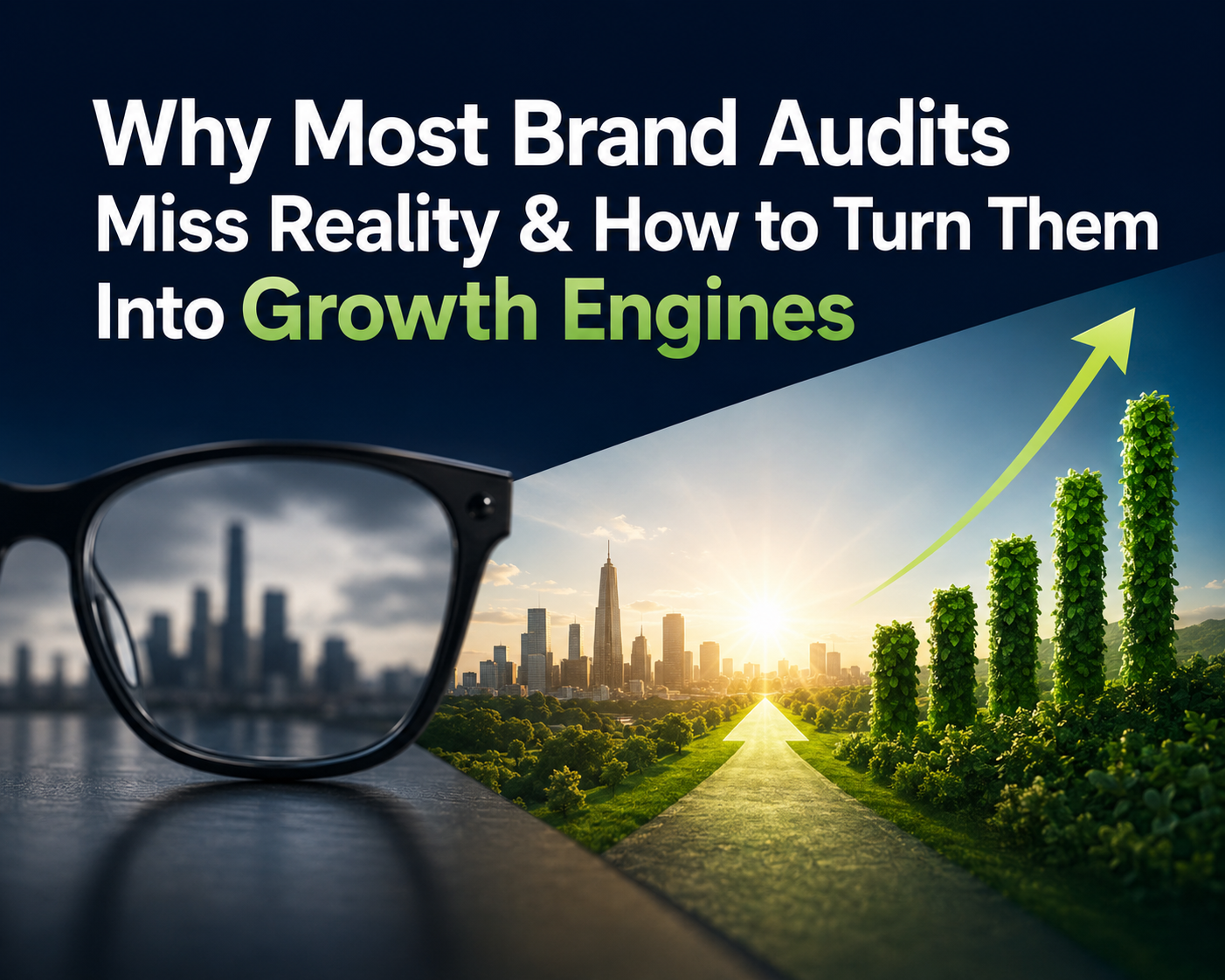
Most brand audits answer a familiar question: “What do people think about us?”
Very few answer the more important one: “How do we actually show up in people’s lives?”
That gap is where growth is either unlocked or quietly lost.
The Limits of Traditional Brand Audits
Traditional brand audits are built on structured inputs surveys, recall-based interviews, and perception metrics. They tell you what consumers say they think, often in controlled, reflective settings.
The problem? People are not great historians of their own behavior.
When you ask someone about a brand, they reconstruct an answer. It’s filtered through memory, bias, and what sounds reasonable. What gets lost is the messy, real-world context in which brand experiences actually happen.
What these audits often miss:
- The environment in which decisions are made
- The friction encountered during real usage
- The emotional nuance of in-the-moment interactions
A brand might score high on “quality” in surveys, yet consistently frustrate users during onboarding, packaging interaction, or customer support moments. That contradiction rarely surfaces in traditional audits but it’s exactly where growth opportunities live.
Decoding Brand DNA in the Real World
To truly understand a brand, you have to move beyond what it claims to be and observe what it does in people’s lives.
This means shifting from stated values to observed behavior.
Instead of asking, “Do people trust us?”, look at:
- Where the brand naturally fits into routines
- Where it feels forced or unnecessary
- Moments of delight that create loyalty
- Workarounds that signal hidden problems
Real insight comes from seeing the brand in context inside homes, during commutes, at the point of use. These moments reveal how the brand behaves when no one is watching.
Often, the most valuable discoveries are small:
- A packaging detail that confuses first-time users
- A feature that people consistently ignore
- A benefit customers love but the brand never communicates
These are not “perception issues.” They are experience truths and they’re far more actionable.
Mapping Shopper Reality (Not Just the Funnel)
Most brand audits rely on neat, linear funnels: awareness → consideration → purchase.
But real journeys don’t look like that.
They’re messy, non-linear, and shaped by micro-moments:
- A quick comparison during a lunch break
- A last-minute switch due to availability
- A recommendation from a friend that overrides weeks of research
When you observe actual behavior, you see that decisions are rarely the result of a single, rational path. They’re assembled from fragments of experience.
The key insight:
The “decision journey” looks very different when you watch it versus when you ask about it.
And that difference matters. Because growth doesn’t come from optimizing an imagined funnel it comes from understanding the real one.
Identifying Real Growth Levers
Many brand strategies focus on shifting perception: improving awareness, refining messaging, increasing recall.
But perception alone rarely drives meaningful growth.
Growth comes from:
- Fixing friction that disrupts experience
- Amplifying what already works naturally
- Aligning messaging with actual usage
Consider common missed opportunities:
- Packaging that creates hesitation at the shelf
- Messaging that highlights benefits people don’t care about
- Emotional triggers that exist but are under-leveraged
These are not massive, expensive changes. They are precise adjustments rooted in reality.
And they often have disproportionate impact.
Activating Insights with Clarity
The real power of a brand audit isn’t in diagnosis it’s in direction.
Insights should translate into clear, actionable moves:
- Messaging that reflects real use cases
- Product tweaks that remove friction
- Experience improvements that strengthen loyalty
When insights are grounded in real consumer moments, something important happens internally: alignment.
Teams don’t just hear the problem they can see it.
A video of a frustrated user or a photo of a confusing interaction creates urgency that a slide never can.
That visibility accelerates decision-making, reduces debate, and builds confidence in action.
Closing Thought
Brand audits shouldn’t just tell you what’s wrong.
They should show you where to act and why it matters.
Because growth doesn’t come from understanding what people say about your brand.
It comes from understanding how your brand actually lives in their world and making that experience better.